
No-show fees in physiotherapy: What is allowed in Switzerland and how you implement it
Physiotherapists in Switzerland are allowed to charge no-show fees – but only if the fee was communicated transparently in advance, is proportionate, and an actual loss occurred. Pre-authorisation via credit card is the technically simplest security. TWINT does not support pre-authorisation.
Published:
Last updated (content):
Last updated (prices):
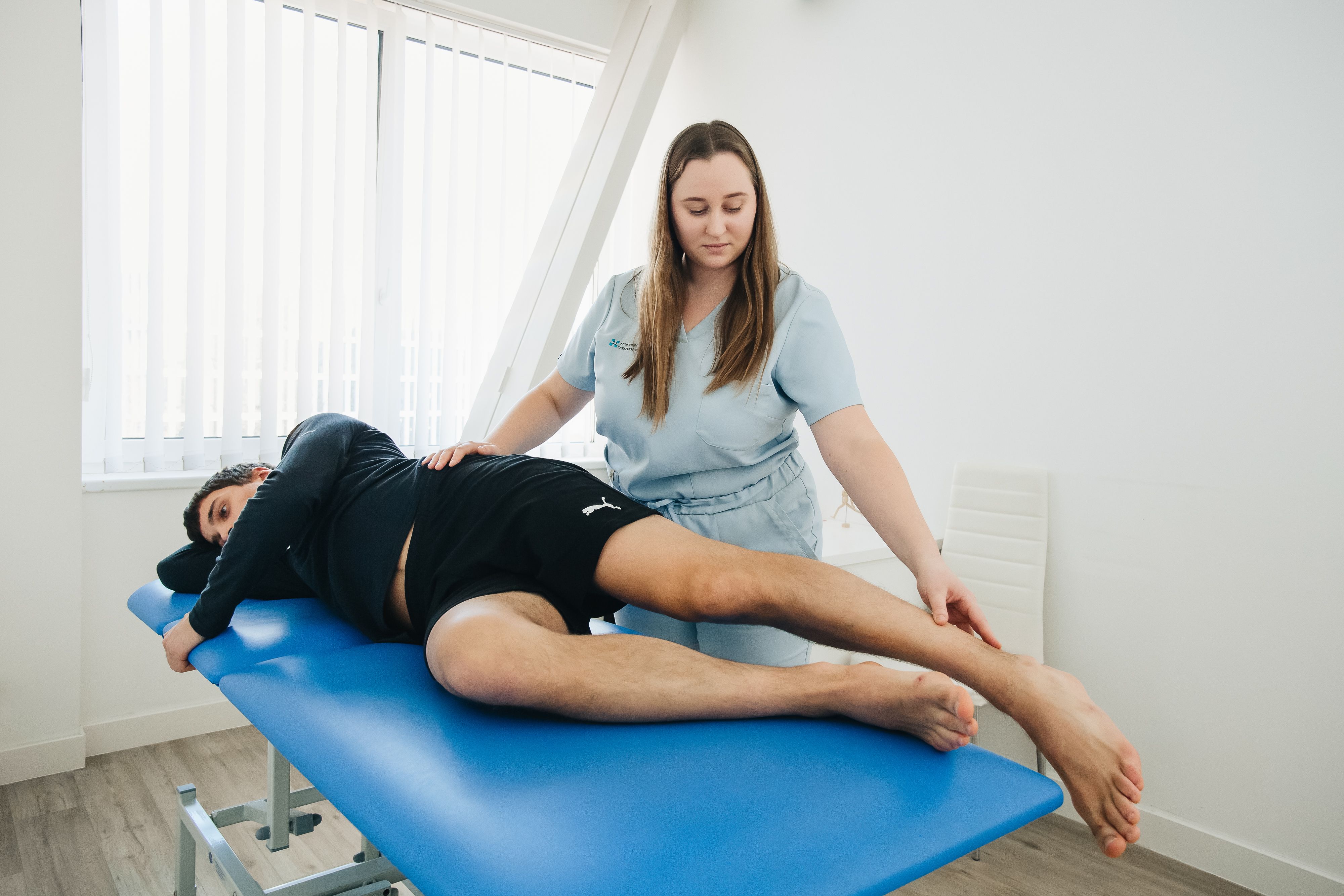
Physiotherapists in Switzerland are permitted to charge no-show fees – but only if the fee has been transparently communicated in advance, is proportionate, and an actual loss has been incurred. The technically simplest safeguard is pre-authorisation via credit card during online booking, combined with a clear no-show policy in the GTC.
This guide explains the Swiss legal situation (CO Art. 160 et seq.), shows you how to determine a proportionate fee, and how to technically implement pre-authorisation via Payrexx.
1. The Problem: Unexcused Missed Appointments Cost Real Money
A 50-minute physiotherapy appointment that is missed without excuse results in a complete loss of service for the practice without compensation. With a self-payer session price of EUR 120 and ten no-shows per month, this amounts to a monthly revenue loss of EUR 1,200. Added to this is the effort involved: filling gaps at short notice, following up, and in the worst case, unpaid payment reminders for patients who failed to appear.
The problem is structural: anyone who can cancel an appointment free of charge – or simply fail to show up – has no financial incentive to keep the appointment. A clear no-show policy with financial consequences demonstrably changes behaviour.
2. Legal Situation: What the Code of Obligations Permits
In Switzerland, booking an appointment creates a contract – even without written confirmation. If one party fails to comply with the contract, the other party can generally claim damages (CO Art. 97 et seq.). In practice, however, this is difficult to enforce: the practice must prove that the slot could not be filled otherwise and that an actual loss of earnings was incurred.
The more elegant solution is a contractual penalty under CO Art. 160 et seq.: here, a fixed fee is contractually agreed in advance, which becomes due in the event of non-performance – without proof of loss. This requires a clear agreement accepted at the time of booking – e.g. GTC consent in the booking confirmation.
Legal Instrument | CO Basis | Proof of Loss Required | Practical Recommendation |
Damages | Art. 97 et seq. CO | Yes – time-consuming | Not recommended |
Contractual penalty | Art. 160 et seq. CO | No – if contractually agreed | Recommended |
Pre-authorisation + GTC | Contract law | No – automatic | Highly recommended |
3. What the SPO Says About No-Show Fees
The Swiss Patient Organisation (SPO) considers no-show fees to be fundamentally permissible, but sets out clear conditions: the fee must have been communicated at the time of booking, may only reflect the loss actually incurred, and must be proportionate. A flat-rate 100% charge of the session price is only justifiable if it can be proven that the slot could not be filled otherwise.
The SPO expressly recommends leniency in the case of unpreventable cancellations – accidents, sudden illness. This is not a legal obligation, but a practice that strengthens the relationship of trust with patients in the long term.
4. How High May the Fee Be?
There is no statutory upper limit. The fee must be proportionate and reflect the actual loss. In practice, the following benchmarks have become established among Swiss therapy practices:
Practice Type | Typical No-Show Fee | Justification |
Physiotherapy (50 min.) | EUR 30–60 | Slot can often be refilled at short notice |
Osteopathy (60–90 min.) | EUR 40–80 | Longer slot, more difficult to refill |
Initial consultation (60+ min.) | EUR 50–100 | Extensive preparation, hardly fillable at short notice |
Important: If the appointment is filled by another person at short notice, no loss has occurred and the fee cannot be claimed. Therefore, document no-shows and whether the slot was refilled.
5. Pre-Authorisation via Payrexx: Technical Implementation
Pre-authorisation is the technically simplest and most effective method for enforcing no-show fees. During online booking, the patient enters credit card details – no amount is charged immediately. Payrexx reserves the agreed amount on the card. If the person attends the appointment, the actual session amount is debited or the reservation is released. If they fail to appear, the no-show fee is debited with just a few clicks in the Dashboard.
Payrexx supports pre-authorisation for Visa, Mastercard (debit and credit), Apple Pay, Google Pay, and Samsung Pay. TWINT and PostFinance do not technically support pre-authorisation. For patients paying with TWINT, prepayment with a refund option upon proper cancellation is recommended.
Step-by-Step Setup
Set up a Payrexx account (pre-authorisation is available in all plans, including Free)
Configure the booking page or payment link with pre-authorisation
Formulate the no-show policy in the GTC: deadline, amount, exceptions
Integrate GTC consent into the booking process – before completing the booking
In the event of a no-show: debit the reserved fee in the Payrexx Dashboard
In the event of a proper cancellation within the deadline: release the reservation, no charge
6. Formulating a No-Show Policy: Sample Text
A legally compliant no-show policy requires three elements: the cancellation deadline, the fee amount, and the exception policy. Sample wording for GTC:
'In the event of appointment cancellations less than 24 hours prior to the agreed treatment or unexcused absence, a cancellation fee of EUR [amount] will be charged. In the event of a proven emergency (accident, sudden illness), the fee will be waived. The fee will be debited via the credit card provided at the time of booking or billed via invoice.'
You can choose the cancellation deadline freely (here 24 hours) – in Switzerland, there is no statutory deadline. 24 to 48 hours is standard in the industry and perceived as fair by patients.
7. Checklist: Setting up No-Show Fees in a Physiotherapy Practice
Formulate a no-show policy with cancellation deadline, fee amount, and leniency policy
Integrate the policy into the GTC and require consent upon booking
Set up pre-authorisation in the Payrexx Dashboard (Visa, Mastercard, mobile wallets)
For TWINT patients: prepayment with refund option as an alternative
Document every no-show: date, slot refilled yes/no, fee charged yes/no
Define an internal leniency rule: e.g. first no-show without fee, fee charged from the second
Communicate the policy proactively: notice upon appointment confirmation and on the booking page
Review annually whether the fee amount is still proportionate
Payrexx supports pre-authorisation for all major credit cards as well as Apple Pay, Google Pay, and Samsung Pay.
You store the credit card details at the time of booking and, in the event of a no-show, debit the agreed fee directly in the Dashboard – without manual invoicing and without collection procedures. Combined with payment links for the regular payment after the session, this covers the entire payment workflow.
Frequently asked questions about no-show fees in physiotherapy practices
Which payment methods does Payrexx support for pre-authorisation?
Payrexx supports pre-authorisation for Visa, Mastercard (debit and credit), Apple Pay, Google Pay and Samsung Pay. TWINT and PostFinance do not technically support pre-authorisation.
View detailed response
Am I allowed to charge no-show fees without prior warning?
No. The fee must have been agreed in advance and communicated at the time of booking. It is not legally enforceable without a contractual agreement (agreement to the T&Cs).
View detailed response
What is the maximum allowed no-show fee?
No legal upper limit. The fee must be proportionate. For physiotherapy, EUR 30–60 is customary and legally non-hazardous.
View detailed response
Is there a statutory cancellation period in Switzerland?
No. In Switzerland, there is no statutory cancellation period for therapy appointments. You can choose the period freely u2013 usually 24u201348 hours u2013 and define it in the T&Cs.
View detailed response
What if the patient does not pay the no-show fee?
With pre-authorisation via credit card, the amount is automatically debited – no dunning procedure is necessary. Without a credit card guarantee, the only option is debt enforcement proceedings, which are hardly worthwhile for amounts under EUR 100.
View detailed response
Do I have to waive the fee in the event of family emergencies?
Not legally, but the SPO recommends goodwill in the event of cancellations through no fault of the customer. An internal goodwill rule strengthens the relationship of trust and prevents complaints.
View detailed response