
Purchase on account in Swiss online shops: models, costs and providers at a glance
Swiss online shops can offer purchase on account in four different ways today: as a classic QR-invoice with a payment deadline, as Buy Now Pay Later (BNPL) with risk assumption by providers such as Klarna or CembraPay, as TWINT Pay later, or as a traditional invoice by post. Each model differs fundamentally in costs, risk distribution and conversion impact — the right choice depends on shopping cart size, target group and risk appetite.
Published:
Last updated (content):
Last updated (prices):
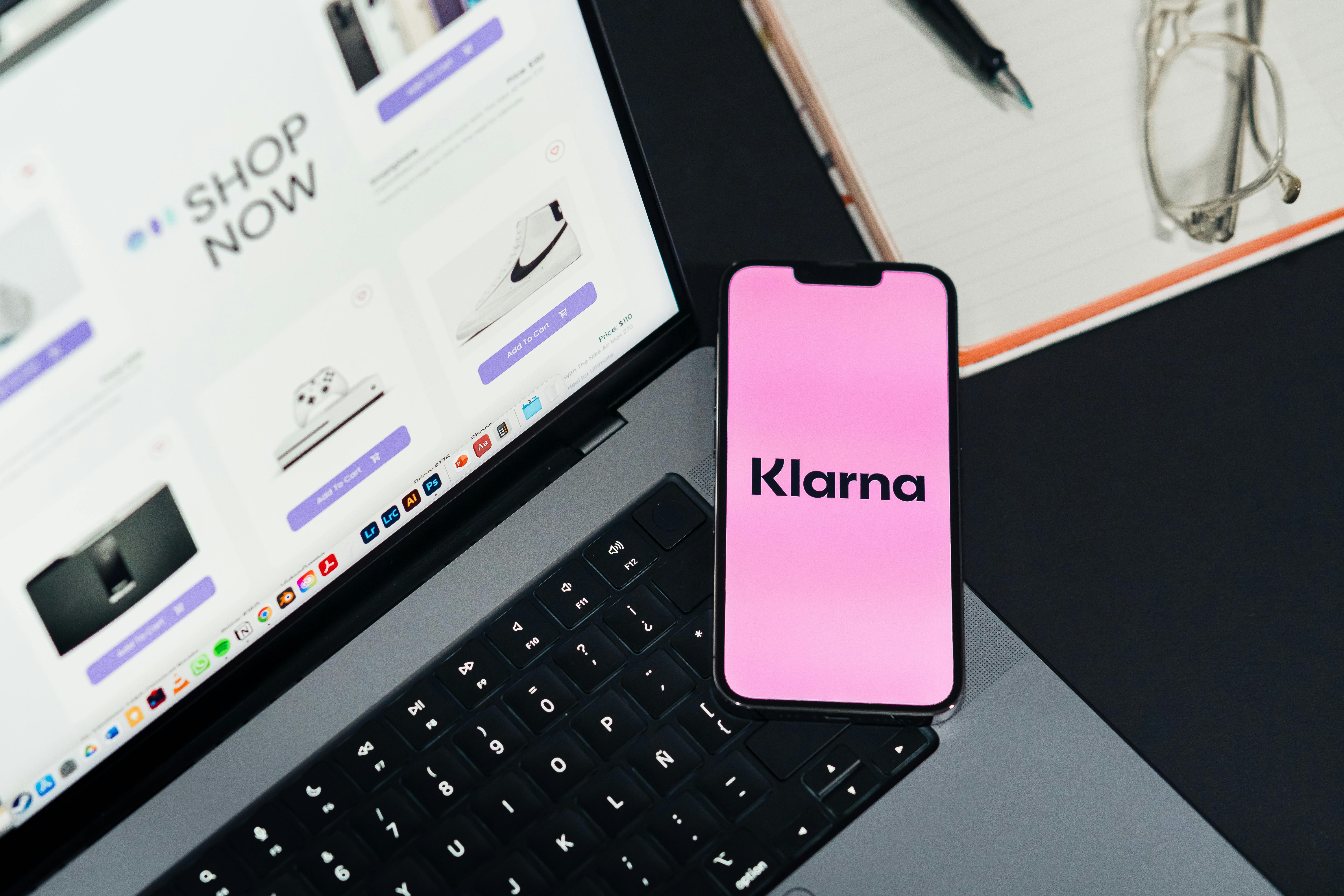
Swiss online shops can now offer purchase on invoice in four different ways: as a classic QR-invoice with a payment term, as Buy Now Pay Later (BNPL) with risk assumption by providers such as Klarna or CembraPay, as TWINT Pay Later, or as a traditional invoice by post. Each model differs fundamentally in terms of costs, risk distribution, and conversion impact — the right choice depends on shopping basket size, target audience, and risk appetite.
This guide presents the four purchase on invoice models in detail, compares the fees per transaction, and helps you choose the right model for your Swiss online shop.
1. What “purchase on invoice” means in Switzerland today — and why it is no longer just an invoice
The term “purchase on invoice” in Switzerland now encompasses significantly more than the traditional dispatch of invoices by post. Consumers understand it to mean any payment method where they receive goods first and pay afterwards — regardless of whether the invoice appears as a QR code in e-banking, is processed via Klarna, or arrives as a TWINT notification on their smartphone.
For merchants, this distinction is crucial because each model involves a different risk distribution, cost structure, and technical integration. The core question is not “Should I offer purchase on invoice?”, but “Which purchase on invoice model suits my business?”.
According to the online merchant survey conducted by the ZHAW, around 70% of Swiss online merchants offer some form of purchase on invoice. The E-Commerce Sentiment Barometer of the HWZ confirms that purchase on invoice remains one of the most requested payment methods among Swiss consumers, with around 70% popularity.
2. The four models at a glance: Classic invoice, QR-invoice, BNPL with risk assumption, TWINT Pay Later
The four models differ in one key point: Who bears the risk if the customer does not pay?
Model 1: Classic invoice (own risk)
You send the goods together with an invoice — by post or as a PDF via email. The customer typically has a payment deadline of 10 to 30 days. You bear the full default risk and are responsible for dunning and debt collection yourself. There are no transaction fees, but costs arise from payment defaults and administration.
Model 2: QR-invoice in checkout
The Swiss QR-invoice (Swiss QR Invoice) is offered as a payment method in checkout. Buyers receive a QR-invoice after placing their order, which they pay via their e-banking app or by scanning. Payment reconciliation is carried out automatically via CAMT.054 notifications from the bank. The default risk lies with you as the merchant. Costs via Payrexx Pay are 0.60% (Free) or 0.50% (Standard/Premium), with a minimum of EUR 1.50 per transaction.
Model 3: BNPL with risk assumption (Klarna, CembraPay, POWERPAY)
Buy Now Pay Later (BNPL) providers fully assume credit checks and the default risk. The customer pays the BNPL provider, and you receive your money guaranteed — minus a transaction fee. Klarna charges 2.40% + EUR 0.30 (Free/Standard) or 1.60% + EUR 0.20 (Premium) with Payrexx. CembraPay and POWERPAY are connected as external External providers, with separate conditions.
Model 4: TWINT Pay Later
TWINT Pay Later is a Swiss BNPL product operated by Swissbilling. Buyers select TWINT at the checkout and opt for the “Pay Later” option — they receive a payment term of 30 days. The credit check runs in the background. Transaction fees are 2.30% + EUR 0.30 (Free) or 2.30% + EUR 0.18 (Standard/Premium).
Model | Risk assumption | Credit check | Merchant fees | Customer payment term | Integration |
Classic invoice | Merchant | None | EUR 0 (+ default risk) | 10–30 days | Manual / ERP |
QR-invoice (Payrexx Pay) | Merchant | None | 0.50–0.60% (min. EUR 1.50) | Individual (e.g. 30 days) | PSP checkout |
Klarna (BNPL) | Klarna | Real-time | 1.60–2.40% + fixed | 14–30 days (or instalments) | PSP checkout |
CembraPay / POWERPAY | Provider | Real-time | Individual | 30 days (or instalments) | External provider plugin |
TWINT Pay Later | Swissbilling | Real-time | 2.30% + fixed | 30 days | PSP checkout |
3. Who bears the risk? Own risk vs. guaranteed payment by external providers
Risk distribution is the central difference between the models. With the classic invoice and the QR-invoice, you as the merchant bear the full default risk. If a customer does not pay, you must issue reminders yourself, possibly initiate debt collection proceedings, and, in the worst case, write off the amount.
With BNPL providers such as Klarna, CembraPay, or POWERPAY, as well as with TWINT Pay Later, the risk lies with the provider. You receive the invoice amount minus the transaction fee — regardless of whether the customer ultimately pays. This protection comes at a price: Transaction fees are higher than with the QR-invoice.
In concrete terms: For a shopping basket of EUR 120, you pay EUR 1.50 in fees with the QR-invoice via Payrexx Pay (minimum fee; 0.50–0.60% only applies from approximately EUR 250–300 shopping basket value). With Klarna (Standard), the fee is EUR 3.18 (2.40% + EUR 0.30). In return, you bear no default risk with Klarna. The question therefore is: How high is your actual default rate, and does it justify the higher BNPL fees?
4. What purchase on invoice costs the merchant: Fee structure of the various models
The cost structure varies considerably depending on the model. Here is a direct comparison of the fees for Swiss transactions:
Payment method | Free plan | Standard plan | Premium plan |
Purchase on invoice (QR-invoice via Payrexx Pay)* | 0.60% | 0.50% | 0.50% |
Klarna | 2.40% + EUR 0.30 | 2.40% + EUR 0.30 | 1.60% + EUR 0.20 |
TWINT Pay Later | 2.30% + EUR 0.30 | 2.30% + EUR 0.18 | 2.30% + EUR 0.18 |
For comparison: Visa/Mastercard | 2.50% + EUR 0.30 | 1.65% + EUR 0.18 | 1.35% + EUR 0.18 |
* Minimum fee EUR 1.50 per transaction.
For CembraPay, POWERPAY, and Ideal Payment, individual conditions apply that you agree directly with the provider. In addition, when connecting via an external payment provider, a Payrexx surcharge applies: 1.00% (Free), 0.50% (Standard), or 0.25% (Premium).
Sample calculation: With an average shopping basket of EUR 150 and 500 purchase on invoice orders per month, the cost calculation in the Standard plan is as follows: QR-invoice costs you EUR 750 per month (500 × minimum fee EUR 1.50, as 0.50% of EUR 150 would only be EUR 0.75). Klarna costs EUR 1,950 (2.40% + EUR 0.30 × 500). The difference of around EUR 1,200 per month is the price for complete risk assumption by Klarna.
5. Providers in Switzerland: Klarna, CembraPay, POWERPAY, TWINT, and others in comparison
The Swiss market features several established purchase on invoice providers with different strengths:
Klarna is the most internationally well-known BNPL provider. In Switzerland, Klarna offers purchase on invoice (14 or 30 days), instalment payments, and immediate payment. Klarna fully assumes credit checks and default risk. Available in Switzerland, Germany, Austria, France, and Italy.
CembraPay (Cembra Money Bank) is a Swiss provider that offers purchase on invoice with and without an instalment payment option. CembraPay is aimed at medium-sized to large shops and offers guaranteed payout. Conditions are agreed individually.
POWERPAY (MF Group AG) is also a Swiss provider focusing on purchase on invoice and instalment payments. POWERPAY assumes credit checks and debt collection. Particularly widespread in the Swiss fashion and lifestyle segment.
Ideal Payment is aimed at small and medium-sized enterprises that wish to agree conditions individually and adapt processes to their business model. The entry threshold is lower than with CembraPay or POWERPAY.
TWINT Pay Later is not an independent BNPL provider, but a feature within the TWINT app, operated by Swissbilling. The advantage: Buyers do not need to create a new account — they use their existing TWINT app. Reach in Switzerland is correspondingly high.
Provider | Purchase on invoice | Instalment payment | Risk assumption | Available in | Integration via Payrexx |
Yes (14/30 days) | Yes | Yes | CH, DE, AT, FR, IT | Payrexx Pay Plus (direct) | |
Yes (30 days) | Yes | Yes | CH | External provider | |
Yes (30 days) | Yes | Yes | CH | External provider | |
Yes (individual) | Individual | Yes | CH | External provider | |
Yes (30 days) | No | Yes (Swissbilling) | CH | Payrexx Pay (direct) | |
Yes (individual) | No | No (own risk) | CH | Payrexx Pay (direct) |
6. Which model suits which shop? Decision guide by industry and risk profile
The choice of the right model depends on three factors: shopping basket size, target audience, and risk appetite.
Small shopping baskets under EUR 50 (e.g. groceries, cosmetics): Here, fixed fees and minimum fees take up a disproportionately large share – including the EUR 1.50 minimum fee of the QR-invoice. For small shopping baskets, purchase on invoice is rarely economical; TWINT or card are usually the better choice here.
Medium shopping baskets from EUR 50 to 200 (e.g. fashion, books, household goods): The sweet spot for BNPL. Klarna and TWINT Pay Later offer the best compromise between costs and risk protection here. The conversion impact is particularly strong in this segment because customers want to check the goods before paying.
Large shopping baskets over EUR 200 (e.g. electronics, furniture, sports equipment): BNPL with instalment payments (Klarna) becomes a conversion driver. However, the QR-invoice with a clear payment term also works here — provided you have a functioning dunning system.
Existing customers with a known payment history: The QR-invoice or classic invoice is sufficient. The default risk is low, and the fees are minimal.
New customers without purchase history: BNPL with risk assumption. The default risk is highest here, and credit checks by Klarna or CembraPay protect you.
Checklist: Setting up purchase on invoice in a Swiss online shop
Define your risk profile: Are you prepared to bear the default risk yourself, or do you want to outsource it?
Check your average shopping basket size: For small amounts under EUR 50, fixed fees are particularly relevant.
Compare transaction fees: Calculate using your actual order volume, not benchmark values.
Decide whether you want to offer one or more purchase on invoice methods in parallel — e.g. QR-invoice + Klarna.
Clarify integration: Is your PSP or shop system compatible with the desired providers?
Set up a dunning process if you offer QR-invoice or classic invoice (own risk).
Test the checkout experience: Is the purchase on invoice option displayed clearly and comprehensibly?
Find out about credit checks: What data is collected, and how does a rejection affect the customer experience?
Payrexx offers Swiss online shops multiple purchase on invoice models via a single Dashboard: QR-invoice and TWINT Pay Later are available directly via Payrexx Pay, Klarna via Payrexx Pay Plus. In addition, CembraPay, POWERPAY, and Ideal Payment can be connected as external External providers. All methods can be activated in parallel — merchants do not choose per order themselves; instead, customers decide at checkout which variant they prefer.
Frequently asked questions about purchase on account in the Swiss online shop
How much does purchase on account cost for merchants in Switzerland?
The costs depend on the model. The QR-bill costs 0.50–0.60%, minimum EUR 1.50 per transaction. BNPL providers such as Klarna charge 1.60–2.40 % plus a fixed fee of EUR 0.20–0.30 per transaction, but assume the default risk in return.
View detailed response
Which invoice payment providers are available in Switzerland?
The most important providers are Klarna, CembraPay (Cembra Money Bank), POWERPAY (MF Group), Ideal Payment and TWINT Pay later (Swissbilling). In addition, comerciantes can offer the QR-bill as a self-risk option via their PSP.
View detailed response
Is purchase on account still popular in Switzerland?
Yes. According to the HWZ E-Commerce Sentiment Barometer, purchase on account is one of the most popular payment methods in Switzerland, with a popularity rate of around 70 %. Around 70 % of Swiss online Comerciantees offer some form of purchase on account.
View detailed response
What is the difference between purchase on invoice and BNPL?
Traditional purchase on invoice means that the Comerciante issues an invoice and carries the default risk themselves. With BNPL (Buy Now Pay Later), a specialised provider such as Klarna or CembraPay handles the credit check and guarantees payment to the Comerciante.
View detailed response
Can I offer multiple purchase on invoice methods at the same time?
Yes. Many Swiss online shops offer multiple options in parallel — for example, QR-bill for regular customers and Klarna for new customers. Customers choose for themselves at checkout.
View detailed response
For which shops is BNPL with risk assumption particularly worthwhile?
BNPL is particularly worthwhile for shops with many new customers, medium to large shopping baskets (EUR 50–500) and sectors with high return rates such as fashion or shoes.
View detailed response